
核心原理
- 通过shouldComponentUpdate()方法,判断是否需要更新组件
- 通过React.memo()方法,判断是否需要更新组件
- 通过React.PureComponent()方法,判断是否需要更新组件
下面我们来看一个例子:
import React,{PureComponent} from "react";
import Home from "./Home";
import Recommend from "./Recommend"
import Profile from './Profile'

export class App extends PureComponent{
    constructor(){
        super()
        this.state = {
            message:"Hello World",
            counter:0
        }
    }

    // shouldComponentUpdate(nextProps,newState){
    //     // App进行性能优化的点
    //     if(this.state.message !== newState.message || this.state.counter !== newState.counter){
    //         return true
    //     }
    //     return false
    // }

    changeText(){
        this.setState({message:"你好,世界"})
        // this.setState({message:"Hello World"})
    }

    increment(){
        this.setState({counter:this.state.counter + 1})
    }

    render(){
        console.log("App render")
        const { message,counter } = this.state

        return (
            <div>
                <h2>App-{message}-{counter}</h2>
                <button onClick={e => this.changeText()}>修改文本</button>
                <button onClick={e => this.increment()}>counter+1</button>
                <Home message={message}></Home>
                <Recommend counter={counter}></Recommend>
                <Profile message={message}></Profile>
            </div>
        )
    }
}

export default App上面代码中,我们通过PureComponent实现了组件的性能优化。接下来我们通过React.memo()来实现组件的性能优化,也就是我们的Profile组件。
Porfile组件
请看代码:
import { memo } from "react"

const Profile = memo(function(props){
    console.log("profile render")
    return <h2>Profile:{props.message}</h2>
})

export default Profile
上面我们使用了React.memo()方法来实现组件的性能优化。是不是很简单呢?我们只需要在组件的函数式组件上使用React.memo()方法,然后就可以实现组件的性能优化了。
Home组件
Home组件的优化方法是使用的shouldComponentUpdate()方法。我们通过该方法来判断是否需要更新组件,代码如下:
import React,{Component} from "react";

class Home extends Component{
    constructor(props){
        super(props)

        this.state = {
            friends:[]
        }
    }

    shouldComponentUpdate(newProps,nextState){
        // 自己对比State是否发生变化:this.state 和 nextState
        if(this.props.message !== newProps.message){
            return true
        }
        return  false
    }

    render(){
        console.log("Home render")
        return (
            <div>
                <h2>Home Page:{this.props.message}</h2>
            </div>
        )
    }
}

export default Home
Recommend组件
Recommend组件的优化方法是使用的React.PureComponent方法。和Home组件的优化方法一样,我们通过该方法来判断是否需要更新组件,代码如下:
import React,{PureComponent} from "react";

export class Recommend extends PureComponent{
    render(){
        console.log("Recommend render")
        return (
            <div>
                <h2>Recommend Page:{this.props.counter}</h2>
            </div>
        )
    }
}

export default Recommend
总结
通过上面的代码,我们可以看出,使用React.memo()方法和React.PureComponent()方法来实现组件的性能优化,都是非常简单的。我们只需要在组件的函数式组件上使用React.memo()方法或者React.PureComponent()方法,然后就可以实现组件的性能优化了。如果我们使用的是函数组件式开发用的是React.memo()方法,如果我们使用的是类组件式开发用的是React.PureComponent()方法。
注意事项
- React.memo()方法和React.PureComponent()方法都是用于函数式组件的,不能用于类组件。
React.memo()方法和React.PureComponent()方法都是用于组件的性能优化的,不能用于组件的状态管理。
最后我们附上浏览器上的效果图: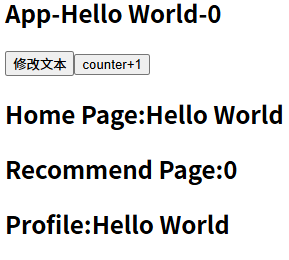
感谢大家观看,我们下次再见!


文章不错支持一下,非常喜欢
文章不错非常喜欢,支持一下
马克吐温的作品就很经典,小时候很爱看
文章不错支持一下,非常喜欢
文章不错非常喜欢,支持
文章不错非常喜欢,支持
[...]回顾如何定义作用域链如何定义'作用域'?说明不同类型的作用域作用域链Scope Chain是JavaScript中的一个基本概念,它属于确定当前执行代码的上下文变量的查找和访问机制。在作用域的构建基于词法作用域的解构,即变量和函数的可见性由它们在源代码中的位置决定。在JavaScript中,每个执行上下文如函数执行上下文都绑有一个与之关联的作用域链。这个作用域就是一个包含多个环境记录Environ[...]
哈喽,你的SSL好像过期喽
@秋风于渭水 确实![[[微笑]]](https://www.xvzhu.cn/usr/themes/freewind/static/img/face/emotions/0.gif)
[...]不同的浏览器存在兼容性问题的核心原因是不同的浏览器可能使用的是不同的浏览器内核。在现代化开发中,大多数的浏览器兼容性问题是可以通过工程化中的配置选项来解决的。1.比如browserslist可以配置目标的浏览器或者Node环境,然后在不同的工具中起作用,比如autoprefixer/babel/postess preset env等,在进行了正确的配置后,开发的Vue或者React项目在进行打包时[...]